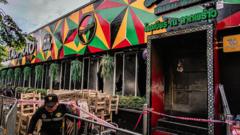
We keep telling ourselves that safety rules are written in blood. Yet, time and again, we watch those lessons burn to the ground.
The devastating inferno at the Rong Beer Na Lat Phrao bar and restaurant in Bangkok on July 12, 2026, which has claimed 30 lives and left dozens fighting for their breath in intensive care, is not just a tragic accident. It is a grim, frustratingly familiar wake-up call about the systemic failures plaguing nightlife safety.
When you walk into a packed music venue on a weekend night, you assume someone checked the exits. You assume the soundproofing on the walls won’t turn into a toxic flamethrower within seconds. You assume that if things go wrong, you can get out.
The horror that unfolded in Chatuchak district proves that these assumptions can be fatal. This is the reality of what happened, why it keeps happening, and what must change before another venue turns into a tomb.
What Went Wrong Inside Rong Beer Na Lat Phrao
Shortly before midnight on Sunday, July 12, the Rong Beer Na Lat Phrao beer hall was packed with patrons enjoying live music. It was supposed to be a normal weekend wrap-up.
Athipat "Ice" Wijarn, a musician performing on stage when the chaos started, recalled seeing smoke rising from an electrical circuit on the wall directly behind the band. Within seconds, the venue plunged into darkness as the main power failed. Then came a loud pop, followed by a rapid explosion of fire.
What happened next was a textbook nightmare. Thick, black smoke filled the space almost instantly. In a dark, crowded room filled with tables, chairs, and panicked people, finding an exit becomes near-impossible.
Terrified patrons ran for their lives. Some made it out the front entrance, their clothing visibly on fire. Others, blinded by the dense smoke, fled toward the back of the building, seeking refuge in the kitchen and bathrooms.
That decision proved fatal for many. Firefighters later discovered a concentrated cluster of victims in these rear areas. Out of the 30 people confirmed dead so far, 18 were women and 9 were men, with three more succumbing to their injuries in the days following the incident. Over 70 others were hospitalized, and more than 20 remain in critical condition, fighting severe smoke inhalation and deep burns.
The Illusion of Safety and the Reality of Blocked Exits
On paper, Rong Beer Na Lat Phrao was a legally registered business. It had recently undergone inspections. It even advertised four emergency exits on its floor plan.
But a safety plan on paper means nothing if the physical path is blocked.
When investigators and forensic police combed through the charred ruins, they found glaring safety violations that directly contributed to the death toll.
- Obstructed Paths: Bangkok Governor Chadchart Sittipunt pointed out that key exits were physically blocked. Stacked beer crates blocked an exit near the kitchen. A heavy table obstructed another.
- No Emergency Lighting: When the power went out, survivors reported that no emergency lights kicked in. Patrons were left in total, suffocating darkness, unable to read exit signs.
- Flammable Acoustic Materials: The ceiling was covered in cheap, highly flammable soundproofing foam. Once the initial electrical short circuit occurred—suspected to have started in a ceiling-mounted air conditioning unit—the fire caught the ceiling foam and raced across the venue like wildfire, dripping burning plastic onto the crowd below.
- Locked Doors: Survivors and early responders reported that some of the designated emergency exit doors were locked or barred from the outside, a common and highly dangerous practice used by venue owners to prevent patrons from sneaking in or leaving without paying.
This combination of faulty wiring, flammable materials, and locked doors turned a manageable localized fire into a death trap in less than three minutes.
A Haunting Pattern of Systemic Negligence
For anyone familiar with Thailand's nightlife history, this tragedy feels like a sickening loop. We have seen this exact script play out before, with almost identical details.
The Santika Club Disaster (2009)
During New Year celebrations on January 1, 2009, a fire tore through the high-end Santika Club in Bangkok. The cause was indoor fireworks that ignited the ceiling. The venue was severely overcrowded, lacked proper exit signs, had no fire sprinklers, and had only one main exit for patrons. Sixty-six people died.
The Mountain B Pub Fire (2022)
Thirteen years later, in August 2022, a fire broke out at the Mountain B pub in Chonburi province. Once again, cheap acoustic foam ignited rapidly. Once again, emergency exits were locked or blocked to prevent unpaid bills. Twenty-six people lost their lives.
Comparing these events reveals that the issues are never new. The problem is not a lack of technology or building codes. It is a lack of consistent, unbribable enforcement.
Local authorities conduct inspections, check boxes, and sign off on permits. Yet, when the doors open to the public, venue managers slide beer crates in front of exit doors, lock back gates, and fail to maintain emergency battery systems.
How to Spot a Death Trap Venue Before You Sit Down
If regulators will not protect you, you have to protect yourself. You do not need to be a professional safety inspector to spot a dangerous venue.
The next time you walk into a bar, club, or live music venue, take sixty seconds to scan the room. If you see these red flags, turn around and leave.
1. The Bottleneck Entrance
If the main entrance is a narrow hallway, a single door, or a winding staircase, think twice. If hundreds of people try to push through that single bottleneck during a panic, it will jam.
2. Locked or Chained Exit Doors
Walk past the emergency exits. Are they clear? If you see chains, padlocks, or heavy bars across a door marked "Exit," the venue is violating basic safety laws. Do not stay there.
3. Cluttered Hallways and Passageways
Look at the paths leading to the back of the building. Are they piled high with empty boxes, spare tables, beer kegs, or cleaning supplies? In a blackout filled with thick smoke, these items become tripping hazards that can cost lives.
4. Exposed Ceilings with Exposed Foam
Look up. If you see dark gray or black egg-carton-style foam lining the walls or ceiling without a fire-resistant cover, you are standing under a fuel source. If a spark hits that foam, the room will fill with highly toxic cyanide smoke within seconds.
5. Absence of Visible Extinguishers and Signs
You should easily see red fire extinguishers mounted on the walls and bright, illuminated green exit signs. If the venue is dark and you cannot spot a single exit sign from the center of the room, do not trust that you will find your way out in an emergency.
Immediate Action Items for Patrons and Venue Owners
True safety requires active participation from both the people running the business and the guests supporting them. Here is how we can move forward practically.
For Nightlife Patrons
- Locate Two Exits: Whenever you enter a crowded venue, physically locate at least two ways out. Do not just rely on the main entrance you came through.
- Point Out Blocked Exits: If you see a blocked exit, tell the manager. If they dismiss your concern, leave a review online, report them to local authorities, and take your business elsewhere.
- Have a Plan with Friends: If you are drinking with a group, agree on a designated meeting spot outside the venue in case you get separated during an emergency.
For Venue Operators
- Daily Exit Audits: Make it a rule that every single shift supervisor must physically walk to every emergency exit before opening the doors. Ensure they are unlocked, unblocked, and well-lit.
- Replace Acoustic Foam: Spend the extra money on fire-rated acoustic panels. Cheap polyurethane foam is a killer.
- Train Your Staff: Your bartenders, security guards, and waitstaff should know exactly what to do when an alarm sounds. They must guide patrons out, not run out first.
- Test Backup Power Monthly: Ensure your emergency exit signs and backup floor lighting actually turn on when the main breaker is flipped.
The tragic loss of 30 lives at Rong Beer Na Lat Phrao should never have happened. If we continue to treat fire safety as an annoying bureaucratic hurdle rather than a matter of life and death, we are simply waiting for the next disaster to strike. It is time for patrons to demand better, for owners to act responsibly, and for authorities to enforce the laws without compromise.