Football is never just twenty-two people chasing a piece of leather. Anyone who tells you otherwise is selling a sanitized version of reality. If you wanted proof of this, you only had to look at Atlanta Stadium on Wednesday. Argentina had just snatched a breathtaking, late 2-1 victory over England in the World Cup semifinal. The pitch was a mess of sweat and tears. But before the grass even had time to settle, Lionel Scaloni's squad decided to make a statement that went far beyond the sport.
Holding a massive banner declaring "Las Malvinas son Argentinas"—which translates to the Falklands are Argentinian—the players thrust a 44-year-old war right back into the global spotlight.
This was not a spontaneous burst of patriotism. It was a calculated, deeply emotional act that instantly revived a historical wound. In Argentina, the claim to the islands is not some dusty political talking point. It's an active, beating part of the national identity.
To the British, it felt like a cheap stunt designed to ruin what should have been a classic footballing spectacle. To the Argentines, it was the reclamation of a narrative that has been denied to them since their surrender in June 1982.
Behind the Banner of Falklands are Argentinian
To understand why a simple piece of fabric can spark a diplomatic crisis, you have to understand the sheer weight of history.
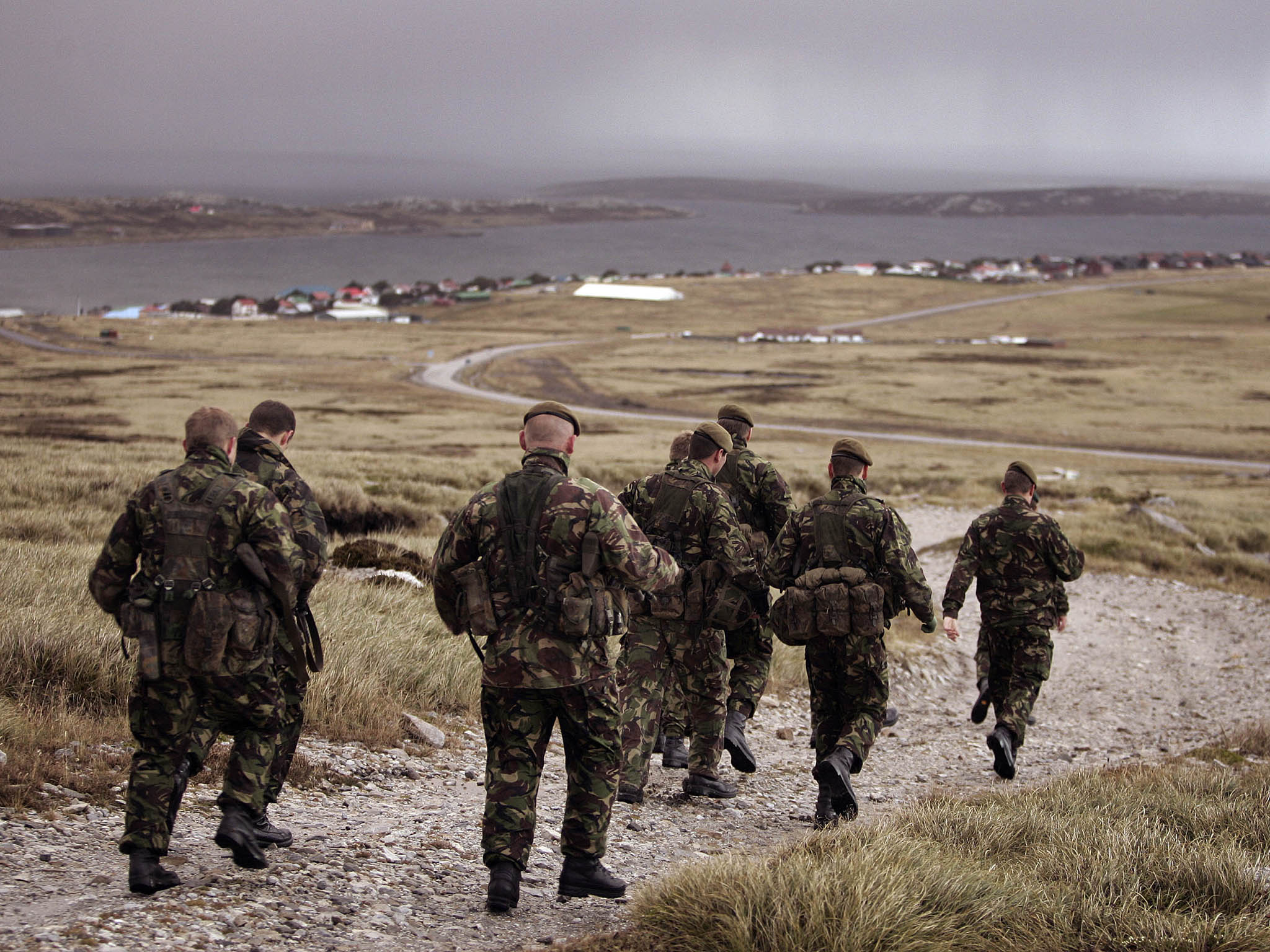
The British have run the Falkland Islands since 1833. It is a sparse, cold archipelago of barely 3,200 people and hundreds of thousands of sheep. But to Argentina, those islands—which they call Las Malvinas—are a stolen piece of their home country. They argue they inherited them from Spain.
In April 1982, Argentina's desperate military dictatorship tried to take them by force. The UK sent an armada down to the South Atlantic.
The resulting 74 days of brutal fighting left 655 Argentinian and 255 British military members dead. The war ended in Argentine surrender, but the obsession with the islands never died.
The match in Atlanta was already boiling over. You could feel it in the stands. The English fans booed the Argentine national anthem, and the massive Argentine crowd responded by completely drowning out God Save the King.
Then Anthony Gordon put England ahead in the 55th minute. It looked like England might actually pull it off. But Scaloni's team does not lie down. Enzo Fernández struck a brilliant equalizer in the 85th minute, and Lautaro Martínez broke English hearts in stoppage time.
But instead of celebrating the chance to win another World Cup, the players chose to celebrate the land they believe belongs to them. Lisandro Martínez, Nicolas Otamendi, and Giovani Lo Celso stood proud behind that banner.
For a country going through massive economic upheaval under President Javier Milei, this was a massive hit of raw national pride.
When Football Becomes Warfare by Other Means
The legendary Argentine writer Jorge Luis Borges famously called the Falklands War "a fight between two bald men over a comb." He was talking about the absurdity of two nations spilling so much blood over a remote patch of rock.
But football has always been the venue where those geopolitical battles are fought under the guise of play.
We all remember 1986. Only four years after the war, Diego Maradona scored both the "Hand of God" and the "Goal of the Century" against England. Maradona himself admitted that the game felt like symbolic revenge for the young boys who died in the cold waters of the South Atlantic.
The players who held the banner on Wednesday are part of a generation that did not fight in that war, but they grew up on the legend of Maradona. They were taught that England is the historic oppressor.
And the political class was quick to fan the flames. Argentina's Vice President, Victoria Villarruel, immediately took to social media. Her father fought in the 1982 war. Before the match, she publicly referred to England as "usurping pirates". After the game, she was ecstatic:
"The Falklands are Argentine! They banned bringing them to the stadium and forgot that we carry them in our blood and our hearts."
It is a powerful sentiment in Buenos Aires, but it has landed the team in incredibly hot water with FIFA.
The FIFA Rulebook vs Raw Human Emotion
FIFA has some of the strictest codes of conduct in all of sports when it comes to political expressions. Their stadium rulebook explicitly bans any "banners, flags, flyers, apparel and other paraphernalia that are of a political, offensive, and/or discriminatory nature".
The British government has already pressured FIFA to launch an official investigation. The English Football Association is furious. They argue that using a global sporting event to push a territorial claim is unacceptable and cheapens the game.
But here is the reality. FIFA can hand down fines. They can threaten suspensions. They can try to scrub politics from the stadiums with corporate precision.
But they cannot erase what is written in the hearts of these players.
To people like Lo Celso or Martinez, the Falklands are not a political talking point to be bargained away. They are an existential truth.
For them, carrying that banner is not about breaking FIFA's rules; it's about honoring the dead.
What Happens Next
If you are following this story, the drama is only beginning. Here are the immediate developments you need to watch:
- FIFA Disciplinary Proceedings: Expect FIFA to issue a substantial fine to the Argentine Football Association (AFA) within the coming days. Suspension of players is unlikely but remains a possibility if the UK escalates pressure.
- The World Cup Final: Argentina now heads to New Jersey to face Spain in the final. The diplomatic distraction could either steel their resolve or disrupt their focus.
- The Third-Place Match: England faces France in the third-place match. It is a quiet end to what was a highly promising run, and the English media will likely keep the focus on the "unsporting" behavior of the Argentines.
This rivalry has survived forty years of peace. It has survived the passing of Maradona.
As long as the British flag flies over Stanley and Argentine children are taught that the islands belong to them, a football match between these two countries will always be a war in short pants.