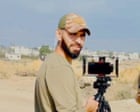
Journalism in Gaza isn't just dangerous anymore. It's a statistics-defying anomaly that challenges everything the international community claims to protect. On Saturday, June 20, 2026, an Israeli airstrike struck a residential home in the Bureij refugee camp located in central Gaza. Inside that home was Ahmed Wishah, a seasoned cameraman for Al Jazeera Mubasher. He didn't survive the attack.
His death adds another name to a list that press freedom organizations say has no parallel in modern warfare. Wishah is the 12th Al Jazeera staff member killed since the escalation of hostilities in October 2023. According to data tracked by the Committee to Protect Journalists (CPJ), at least 260 Palestinian media workers have lost their lives in the conflict.
A Family Tragedy Replayed in Two Months
The killing of Ahmed Wishah hits the Al Jazeera network with a specific, cruel familiarity. Just over two months ago, on April 8, 2026, Israeli shelling targeted a vehicle traveling in Gaza. That blast killed Mohammed Wishah, a prominent correspondent for the exact same network. He was Ahmed's brother.
Losing two brothers, both working for the same international news organization within a matter of weeks, highlights a reality that local media crews face every morning when they put on their blue press vests. These vests are meant to serve as armor under international humanitarian law. Instead, workers on the ground openly question if the identifiers make them targets.
The strike on the Bureij camp left the surrounding neighborhood digging through concrete dust and twisted rebar. Neighbors and rescue teams used whatever tools they could find to clear the rubble. It's a scene that has repeated itself across the strip, but when a prominent media figure is under the debris, the political fallout radiates instantly across the globe.
The Dual Narratives of Airstrikes and Accusations
Following the strike, the Israel Defense Forces (IDF) took immediate responsibility for the operation but paired the admission with a serious accusation. A military spokesperson confirmed to news agencies that the IDF carried out the strike targeting Wishah. The military claimed that the cameraman was an active Hamas operative.
This has become a recurring pattern. When prominent media figures die under fire, the military frequently issues notices alleging dual identities. The IDF spokesperson did not immediately present concrete evidence linking Wishah to militant activities but promised a detailed statement would follow. In the case of his brother Mohammed, the military previously released images they claimed showed him holding weapons in an operational capacity.
Al Jazeera Media Network didn't wait to push back against the allegations. They issued an immediate, fiery statement condemning the strike as a deliberate assassination. The network stated that the accusation is part of a multi-year smear campaign designed to justify crimes against its personnel. They argue that these claims serve as a cover to eliminate the few remaining eyewitnesses documenting the military campaign inside the enclave.
The network called on global legal bodies and press advocates to intervene. They plan to take the case to international legal channels, pointing out that under the Geneva Conventions, journalists in conflict zones must be treated as civilians.
The Broader Collapse of Media Access
You can't look at Wishah's death in isolation. It happens at a time when independent international journalists are barred from entering the Gaza Strip unless they are embedded with the Israeli military, which comes with strict censorship guidelines. This means the entire world relies almost exclusively on local Palestinian reporters, fixers, and cameramen to understand what is happening inside the walls.
When local media workers are killed at this rate, the flow of verified information slows down. It changes how newsrooms operate. Editors become hesitant to send crews into specific zones. Cameramen think twice about setting up live feeds on exposed rooftops. The result is a gradual, quiet blackout of frontline reporting.
Press freedom groups like Reporters Without Borders (RSF) have repeatedly warned that the mortality rate among media professionals in this conflict threatens the foundation of independent war reporting. They point out that more journalists have died in this single theater than during the entirety of World War II or the Vietnam War.
What Happens When Evidence is Delayed
The ongoing dispute over Wishah's legacy highlights a massive gap in how modern military actions are verified. When a state military labels a journalist a combatant, the burden of proof is incredibly high. Yet, in the fast-moving cycle of breaking news, accusations are made instantly, while the supporting documentation often takes weeks, months, or never appears at all.
This creates an environment where public opinion fragments completely. One side sees a systematic execution of a truth-teller. The other side sees the legitimate elimination of a security threat hiding behind a camera. Without independent, third-party investigations on the ground, finding the actual truth becomes nearly impossible.
The International Criminal Court (ICC) has already been petitioned multiple times regarding the targeting of media personnel in the region. Legal experts argue that if the documentation fails to support the combatant claim, these strikes cross the line into clear war crimes.
Action Steps for Following Global Press Safety
Understanding these events requires looking past the immediate headlines and monitoring how international institutions respond to the systemic risks facing media workers.
- Track Documented Incidents: Follow verified updates through the Committee to Protect Journalists ongoing database of media casualties to see independent verifications of journalist statuses.
- Monitor International Court Filings: Watch for updates from the International Criminal Court regarding specific case files submitted by news networks concerning targeted strikes.
- Support Local Reporter Funds: Direct attention to organizations providing physical protection gear, satellite communication tools, and medical support directly to independent crews working without corporate backing.