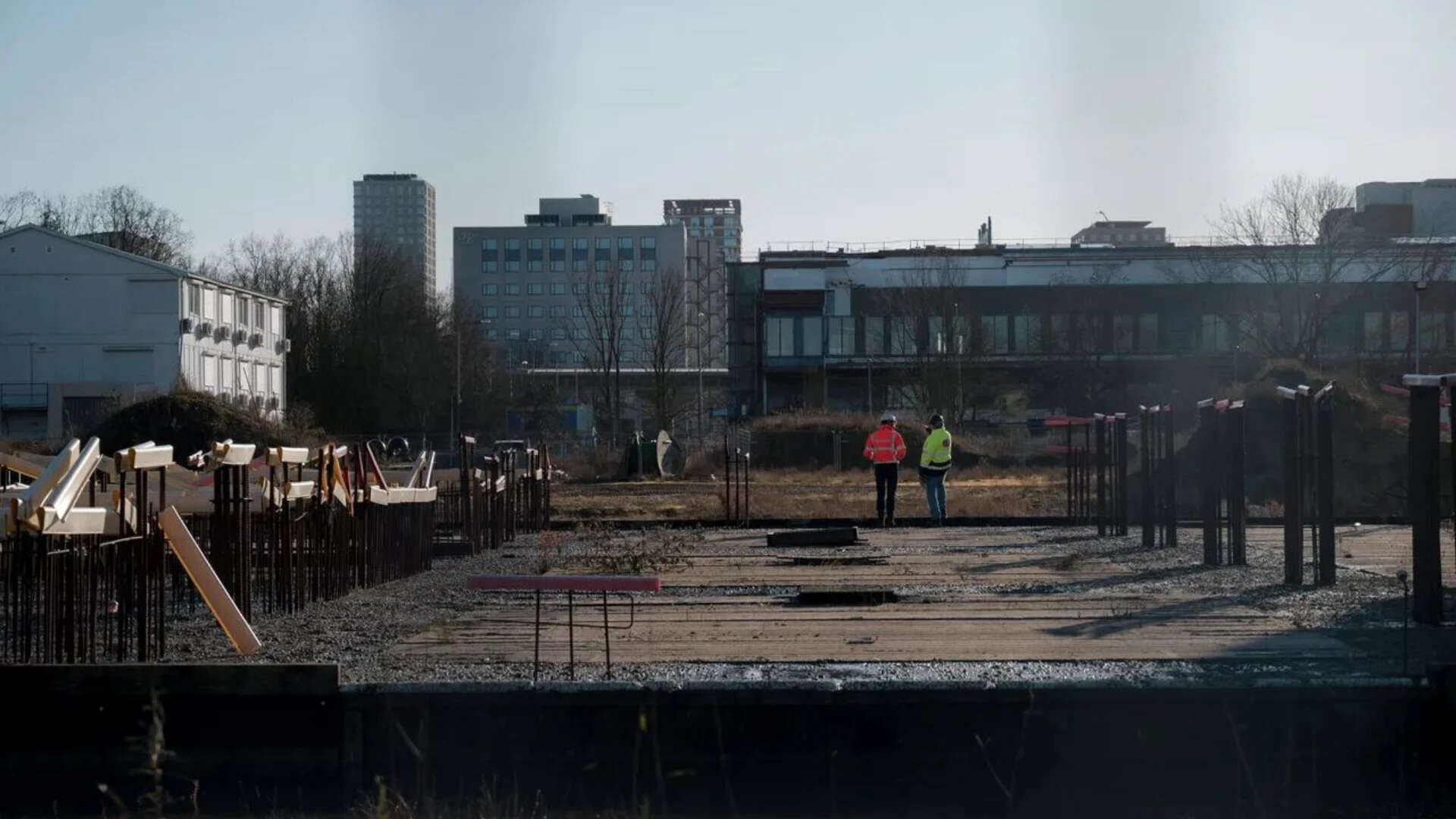
Climate activists just escalated their war on big tech infrastructure, and they aren't using peaceful pickets anymore. Overnight in Amsterdam's western port area, demonstrators targeted a massive Microsoft data center project by throwing water balloons packed with a highly corrosive, custom-made chemical cocktail.
The mixture—a harsh blend of hydrogen peroxide, acetic acid, salt, and acrylic paint—was specifically engineered to inflict structural damage. According to Extinction Rebellion, the group behind the attack, the ingredients were chosen because the acid eats directly into concrete while the hydrogen peroxide forces internal steel reinforcement to rust at an accelerated rate.
While the site developer, Pure DC, claims the stunt didn't delay construction or compromise the building, the message is loud and clear. Activists are shifting from digital advocacy to physical sabotage. And it's all driven by the tech industry's insatiable hunger for artificial intelligence.
The Exploited Loophole and the Power Crisis
The Amsterdam clash isn't just an isolated case of random vandalism. It's the boiling point of a long-running battle between local communities and massive hyperscale infrastructure.
The Netherlands previously enacted strict regulations to ban new hyperscale data centers due to their extreme energy demands. However, the site in Amsterdam's Westport, which will eventually house three massive data stacks reaching heights of 85 meters, manages to bypass these bans. The project is officially being built by British operator Pure DC, which then leases the massive 78-megawatt capacity straight back to Microsoft. Activists call it a blatant loophole used to dodge the rules.
Amsterdam is already grappling with severe power grid congestion. Adding a facility that pulls enough electricity to power an entire mid-sized city strains an already fragile system. Locals face rising electricity costs and grid instability while multi-billion-dollar corporations secure dedicated high-voltage lines to process AI algorithms.
The Massive AI Resource Drain
We constantly hear about the cloud as an abstract, weightless concept. The reality is incredibly heavy, loud, and dirty. The rapid expansion of AI models requires massive compute power, turning these facilities into absolute resource hogs.
Consider the scale of these operations:
- Grid Demand: A single existing Microsoft facility in the Dutch town of Middenmeer accounts for roughly 1% of the entire country's electricity consumption.
- Global Friction: This isn't just a European issue. In the United States alone, local opposition and legal challenges have disrupted at least 75 data center projects worth an estimated $130 billion.
- Hidden Footprints: Major tech firms like Microsoft, Google, and Meta have heavily lobbied regulatory bodies to keep individual facility emissions metrics hidden from public databases, leaving communities in the dark about the true ecological cost.
When peaceful community petitions and regulatory board meetings fail to stop these builds, activists resort to property damage. The logic is simple: if you make building these structures financially risky and legally exhausting, you slow down the corporate expansion.
Geopolitics Meets Climate Activism
The backlash in Amsterdam isn't strictly environmental either. The group behind the acid balloon strike explicitly linked their action to broader global campaigns, joining forces with the Dutch collective Geef Tegengas.
Public anger has intensified following investigations detailing how big tech's infrastructure intersects with global conflict. Reports indicating that military surveillance data is hosted on European cloud servers have turned these physical buildings into lightning rods for geopolitical protest. Activists see the data centers not just as climate liabilities, but as physical extensions of state-sponsored surveillance and military power.
What This Means for the Future of Big Tech
Tech giants are starting to realize that the public permission to build is rapidly evaporating. Microsoft executives have publicly stated goals to introduce better cooling systems, reduce local water consumption, and avoid driving up energy prices for nearby residents.
But for the people living near these construction zones, corporate promises don't match the reality of roaring cooling fans, giant concrete monoliths blocking the skyline, and skyrocketing utility bills.
Expect tech companies to aggressively ramp up private security, install advanced perimeter defenses, and pursue harsh criminal prosecution against protesters. As the race for AI dominance intensifies, the physical infrastructure supporting it will require heavy protection. The local fight over land, water, and power is just getting started, and the tactics on both sides are bound to get much dirtier.
How to Track Local Infrastructure Projects
If you want to know how data infrastructure is affecting your own community, you don't need to wait for headlines. Take these steps to monitor what's happening locally:
- Review Municipal Zoning Agendas: Check your local city or county council website for upcoming zoning changes, specifically looking for "data storage," "industrial utilities," or "technology parks."
- Monitor Water and Power Requests: Hyperscale facilities require massive utility allocations. Public utility board meetings list high-volume commercial requests long before ground is broken.
- Support Local Transparency Initiatives: Follow independent environmental watchdogs that track corporate lobbying efforts and push back against data nondisclosure agreements in your region.