Western media spent months warning that global attention had drifted entirely to the Middle East, leaving Ukraine stranded in its fifth year of resistance. They were wrong.
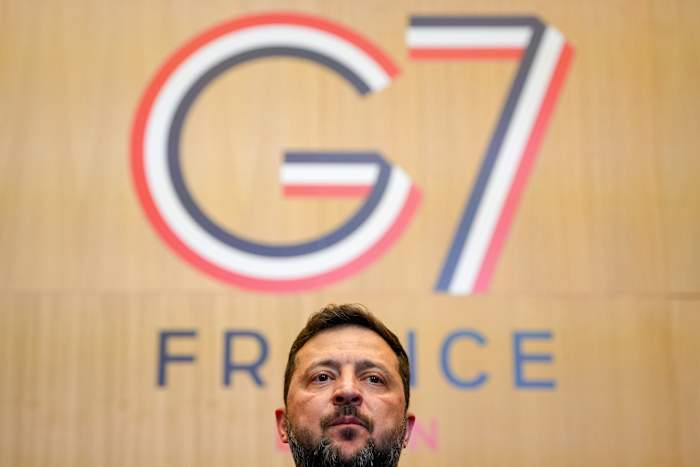
The G7 summit in Évian-les-Bains, France, just flipped the script. Ukrainian President Volodymyr Zelenskyy walked out of the lakeside resort with concrete commitments that directly alter the timeline of this conflict. Despite the friction of a distracted Washington and geopolitical fatigue, the world's leading industrial democracies just re-anchored their support behind Kyiv.
If you think this is just another diplomatic photo-op with vague promises, you're missing the real story. The dynamics on the ground have shifted. Ukraine isn't just holding the line anymore; they're pushing deep into Russian infrastructure, and the G7 just gave them the nod to accelerate that pressure.
The Secret Weapon Ukraine is Using to Shift the Balance
For the past few years, the narrative was dominated by Russia's raw numbers—more artillery, more men, more raw materials. But raw size doesn't mean what it used to on a 2026 battlefield.
Western intelligence officials and battlefield analysts confirm that Ukraine's military performance has improved dramatically over the last few months. They aren't relying on massive, slow-moving infantry advances. They're using high-tech domestic drones to choke out Russian supply lines in occupied territories. Even more significant, these drones are hitting oil refineries deep inside Russian borders.
By crippling Moscow's primary revenue source, Kyiv has brought the reality of the war right to Vladimir Putin’s doorstep. This tactical momentum changed the entire mood in France. UK Prime Minister Keir Starmer observed a distinct "mood change" among leaders, noting that Ukraine is actively taking territory rather than just absorbing blows.
The Trump Factor and the Fight for Air Defense
Let's look at the elephant in the room. Zelenskyy's relationship with U.S. President Donald Trump hasn't always been smooth. With Washington heavily occupied by the ongoing Iran war, Putin spent months trying to bypass European leaders entirely, hoping to negotiate Ukraine’s fate directly with the White House.
Zelenskyy completely neutralized that strategy in Évian.
Instead of waiting on the sidelines, Zelenskyy engaged directly with Trump in a crucial meeting alongside French President Emmanuel Macron. The result? Trump reportedly expressed a very positive stance on assisting Ukraine with missile technology.
This matters because Ukraine has a glaring vulnerability right now. Its supply of U.S.-made Patriot air defense missiles has run dangerously low, largely because American stockpiles have been stretched thin by conflicts in the Middle East. Russia has been exploiting this gap with relentless ballistic missile strikes, including a recent attack that damaged the historic Kyiv-Pechersk Lavra cathedral.
The G7 joint statement explicitly promised to reinforce Ukraine's air defenses and secure its energy grid. But the real breakthrough isn't just about shipping existing weapons. The G7 leaders announced they are considering granting licenses for Ukraine to manufacture Western weapons locally. Kyiv has been aggressively pushing for the rights to build Patriot missiles on its own soil, a move that would make its defense infrastructure entirely self-reliant.
Economic Suffocation and the Shadow Fleet
Pledges of military hardware mean nothing if Russia can still bankroll its war machine. That's why the economic announcements out of this summit are just as vital as the air defense promises.
The UK led the charge by slapping 70 new sanctions on Russia, specifically targeting its military procurement networks and illicit financial pipelines. Crucially, these sanctions take aim at Moscow's "shadow fleet"—an aging network of over 600 vessels used to smuggle Russian oil and liquefied natural gas (LNG) past Western price caps.
By tightening the noose on these shipping networks, the G7 is actively draining the cash reserves Putin relies on to sustain a war now entering its fifth year. Combined with the localized energy devastation from Ukrainian drone strikes, Russia's economic cushion is wearing incredibly thin.
What Happens Next
The diplomatic marathon didn't end in France. Zelenskyy is immediately pivoting to a European Union summit in Brussels. This comes on the heels of Ukraine officially launching its formal EU membership negotiations earlier this week. While the accession process will take years, the political alignment is now set in stone.
The next immediate steps to watch over the coming weeks include:
- The formalization of licensing agreements allowing Ukrainian factories to assemble Western-designed air defense systems.
- The deployment of the newly sanctioned maritime enforcement measures to intercept shadow fleet oil tankers in international waters.
- The coordination of emergency engineering aid from G7 partners to stabilize Ukraine's power grid before the winter months hit.
The Évian summit proved that waiting out the West is no longer a viable strategy for the Kremlin. Kyiv secured the political backing, the economic teeth, and the potential manufacturing rights to sustain this fight for as long as it takes.

